
Article: Bad Bunny at the Super Bowl: A Great Divide or a Great Opportunity?
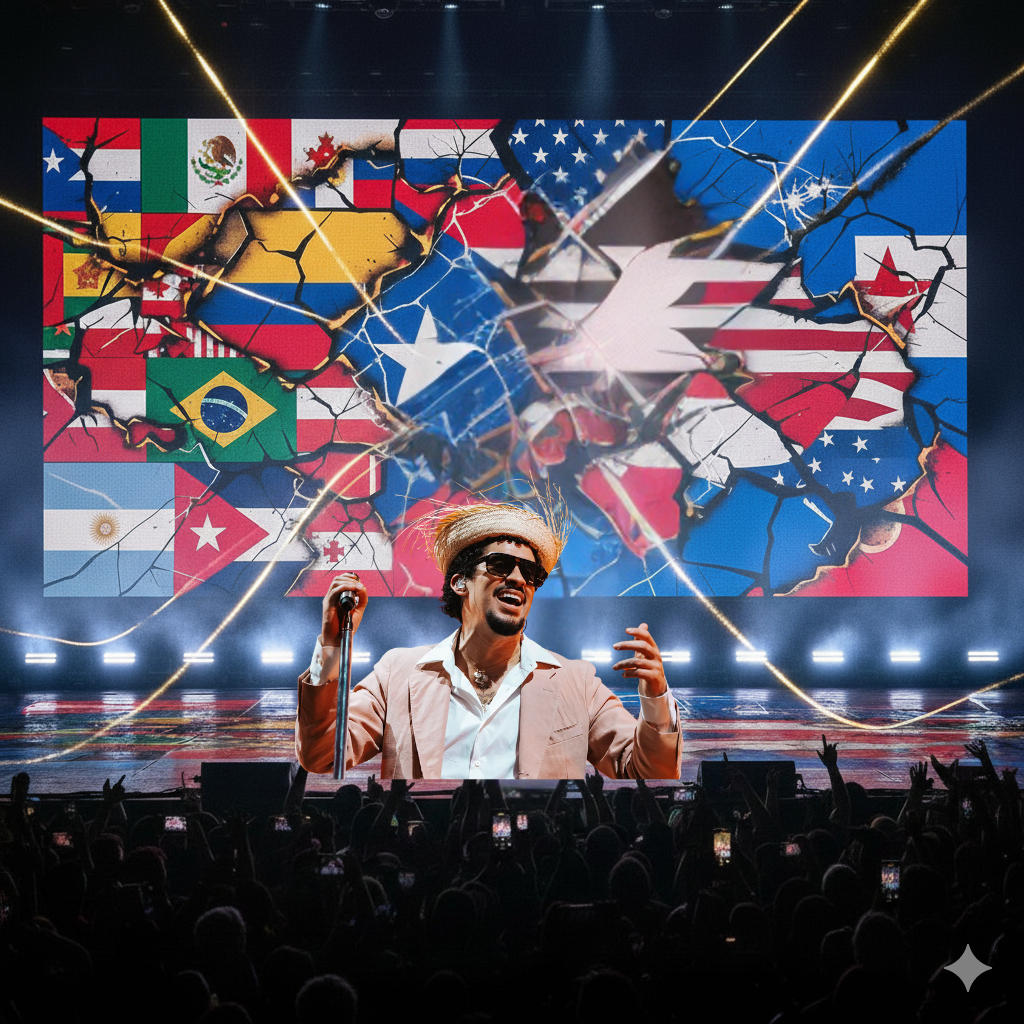
Bad Bunny at the Super Bowl: A Great Divide or a Great Opportunity?
As a Puerto Rican woman, I can't help but feel a swell of pride knowing that someone from our island (a tiny stretch of land measuring just 100 by 35 miles) will headline one of the world's biggest stages: the Super Bowl Halftime Show. Bad Bunny's ascent represents the latest triumph in a long lineage of Puerto Rican trailblazers who've transformed global culture: Ricky Martin's hip-shaking revolution, Daddy Yankee's reggaeton empire, Rita Moreno's multifaceted stardom, Rosie Perez's unapologetic authenticity, and the incomparable Raúl Juliá, whose artistry transcended borders and genres.
These icons reshaped perceptions, challenged stereotypes, and carved out space for future generations. Bad Bunny now joins their ranks, bringing trap, reggaeton, and unfiltered Puerto Rican identity to hundreds of millions of viewers.
But here's my truth: I won't be watching. What?
The Complexity of Representation
Yes, you read correctly. This isn't about denying his achievements or our shared heritage. Puerto Ricans are American citizens (a fact many still don't recognize), so yes, an American artist is performing. My reluctance stems from something more personal: I don't connect with his lyrics, the type of language he uses, or certain aspects of his public persona. And I know I'm not alone. Conversations across Latino households, social media feeds, and community spaces reveal similar tensions. Some celebrate his boundary-pushing artistry and gender-norm defiance; others feel alienated by explicit content or messaging that doesn't align with their values.
This divide, which many see as a weakness, is actually a testament to our community's depth and diversity. The Latino experience has never been singular. We span continents, languages, skin tones, political beliefs, religious practices, and cultural traditions. Bad Bunny's polarizing presence actually highlights a crucial point: authentic representation means embracing complexity, not simplifying it into a convenient narrative.

When Culture Becomes Conversation
Similar moments ripple throughout Latinidad. When Cardi B performed bachata on SNL, weaving her Dominican heritage into mainstream American entertainment, it sparked debate. Was it a cultural celebration or appropriation? Authentic connection or calculated branding? These conversations matter because they reflect our community grappling with visibility, authenticity, and belonging in real time.
At Arlene Insurance Marketing, we recognize these cultural moments for what they are, as catalysts. Watching our culture celebrated, critiqued, and continuously evolving has fundamentally shaped our approach. We recognized early that if mainstream marketing struggled to capture our nuances, we needed to lead differently.
The numbers tell part of the story: Latinos now comprise nearly one-fifth of the U.S. population, with purchasing power exceeding $1.9 trillion and climbing. We're projected to drive the majority of U.S. population growth over the coming decades. But statistics alone miss the point.
We're not a monolith to be captured with translated taglines or tokenistic imagery during Hispanic Heritage Month. We're Cuban Americans in Miami with different experiences than Mexican Americans in Los Angeles. We're third-generation English speakers and recent immigrants. We're conservatives and progressives, Catholics and atheists, reggaeton fans and classical music lovers.
This is why authentic marketing requires cultural competency, not just demographic targeting. It demands understanding that a second-generation Colombian professional in New York navigates identity differently than a Puerto Rican family in Orlando. It means recognizing that language preference, acculturation levels, and cultural touchpoints vary dramatically, and that these differences represent opportunities, not obstacles.
Our Approach: Representation as Strategy
Our campaigns at Arlene Insurance Marketing succeed because we understand that trust isn't built through broad gestures but through specific, culturally resonant connections. We know which messages land with different Latino subgroups because we live these experiences. We understand the code-switching, the generational tensions, the pride mixed with complexity.
This is the foundation for converting awareness into engagement, and engagement into loyalty. When communities see themselves authentically reflected, not stereotyped, not oversimplified, but truly seen, they respond. They trust. They buy. They stay.
The Opportunity in Division
So what does Bad Bunny's Super Bowl performance represent? For some, it's validation. For others, discomfort. For many, it's both simultaneously. And that's exactly why this moment matters.
The divide he creates forces important questions: Who gets to represent us? What does authentic Latino identity look like in 2026? How do we honor tradition while embracing evolution? These aren't problems to solve, they're conversations that make our community richer, more honest, and ultimately more powerful.
For brands willing to engage with this complexity rather than shy away from it, the opportunity is enormous. The Latino market isn't a puzzle to crack with a single key; it's a dynamic, multifaceted community demanding sophisticated, respectful engagement.
Bad Bunny will perform whether I watch or not. His presence on that stage will spark pride, criticism, celebration, and debate across millions of Latino households. And in that messy, vibrant, very real response lies the truth about who we are: diverse, evolving, and impossible to reduce to a single story.
That's the Latino market. That's the opportunity. And that's exactly why marketing that truly understands us will always win.



%20will%20headline%20one%20of%20the%20world's%20biggest...)